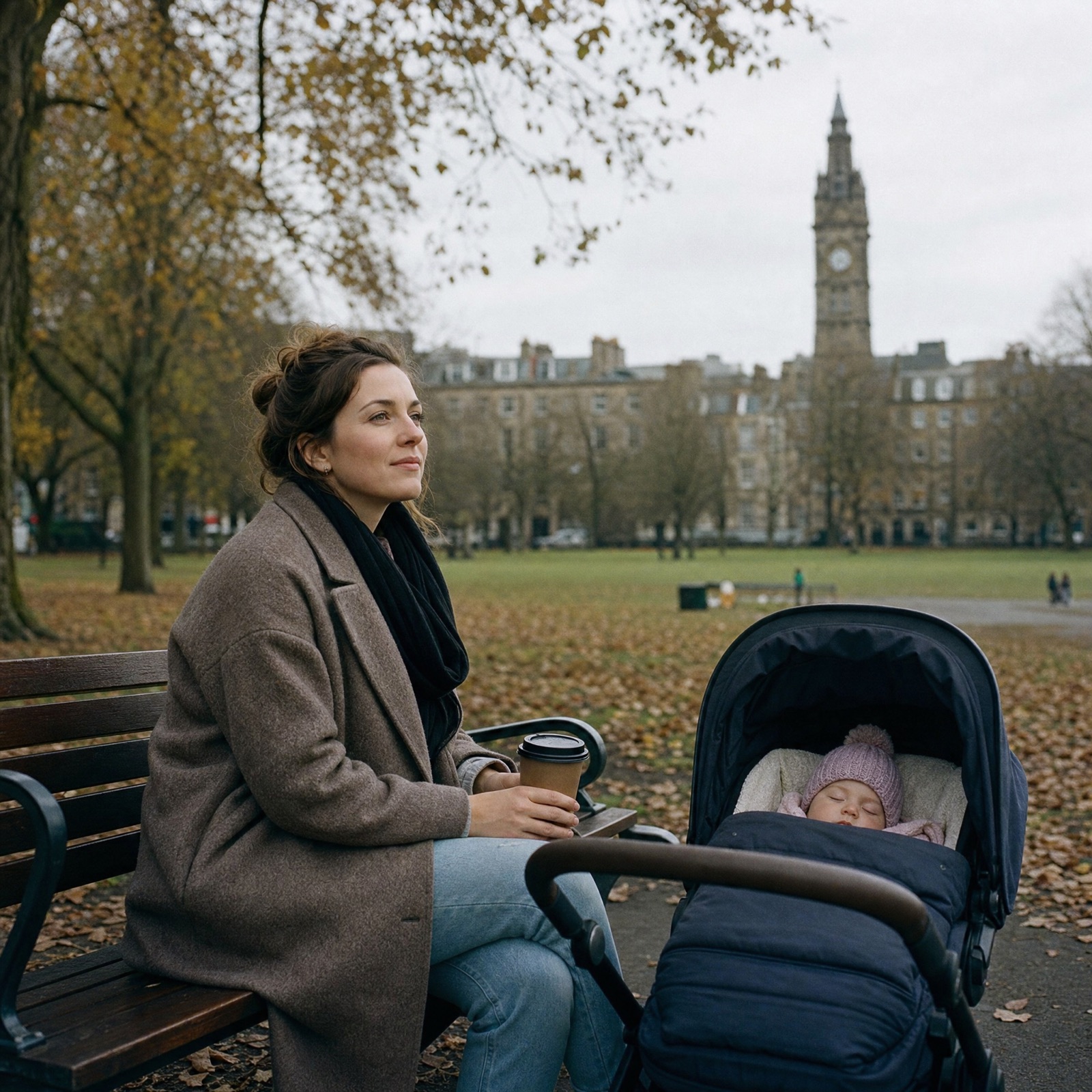
Sandra had been a care worker for most of her adult life. She was good at looking after people — her colleagues said so, and the families of the residents she supported said so too. What she was not good at, she admits now, was looking after herself. By the time she reached her mid-fifties, she had spent years waking between two and four in the morning, lying in the dark with her thoughts racing, and dragging herself through twelve-hour shifts on three or four hours of sleep. 'I thought it was just getting older,' she says. 'I thought everyone felt like this.'
She heard about Vibrant Health Advocates – Copper through a notice at her GP surgery in Motherwell. She almost did not go. The word workshop put her off — she imagined sitting in a circle talking about her feelings, which was not something she had any interest in doing. But a colleague mentioned she had been to a session and found it practical rather than emotionally exposing, and that was enough to get Sandra through the door on a Tuesday evening in autumn. She remembers sitting near the exit, just in case.
The first session surprised her. The facilitator explained the science of the stress response in plain, matter-of-fact terms — how the nervous system gets stuck in alert mode, why anxious thoughts tend to cluster in the early hours, and what the research actually shows about sleep. 'Nobody had ever explained it to me like that before,' Sandra says. 'I'd been told to try melatonin, to try lavender pillow spray. Nobody had explained why my brain was doing what it was doing.' Understanding the mechanism, she found, made the problem feel less like a personal failing and more like something with a practical solution.
The turning point came in week three, when the group worked through sleep restriction therapy — a counterintuitive technique that temporarily limits time in bed in order to rebuild the brain's association between the bed and sleep itself. 'I won't lie, the first week of it was hard,' Sandra says. 'But by the second week, I was falling asleep within twenty minutes of getting into bed, which hadn't happened in years.' She also began using the extended exhale breathing technique during her early morning wakings instead of reaching for her phone — a habit, she learned in the workshop, that had been making things considerably worse by flooding her brain with light and stimulation at exactly the wrong moment.
By the end of the six weeks, Sandra was averaging around six and a half hours of sleep a night. Not perfect, but compared to what she had been managing, it felt like a completely different life. The daytime anxiety she had long attributed to work stress had also quietened considerably. 'It turns out a lot of what I thought was anxiety was actually just what severe sleep deprivation does to you,' she says. 'When you're properly rested, your nervous system can actually cope with things. I hadn't felt that in so long I'd forgotten what it was like.'
Sandra is now two years on from completing the programme, and she describes her relationship with sleep as fundamentally changed. She still has difficult nights occasionally — everyone does — but she has a toolkit now, and she knows how to use it. She has also, she says, stopped assuming that suffering quietly is simply part of being a certain age or a certain kind of person. 'If I'd known this existed five years ago,' she says, 'I would have walked through that door a lot sooner. I'd say to anyone who's struggling: just go. You don't have to keep carrying it on your own.'